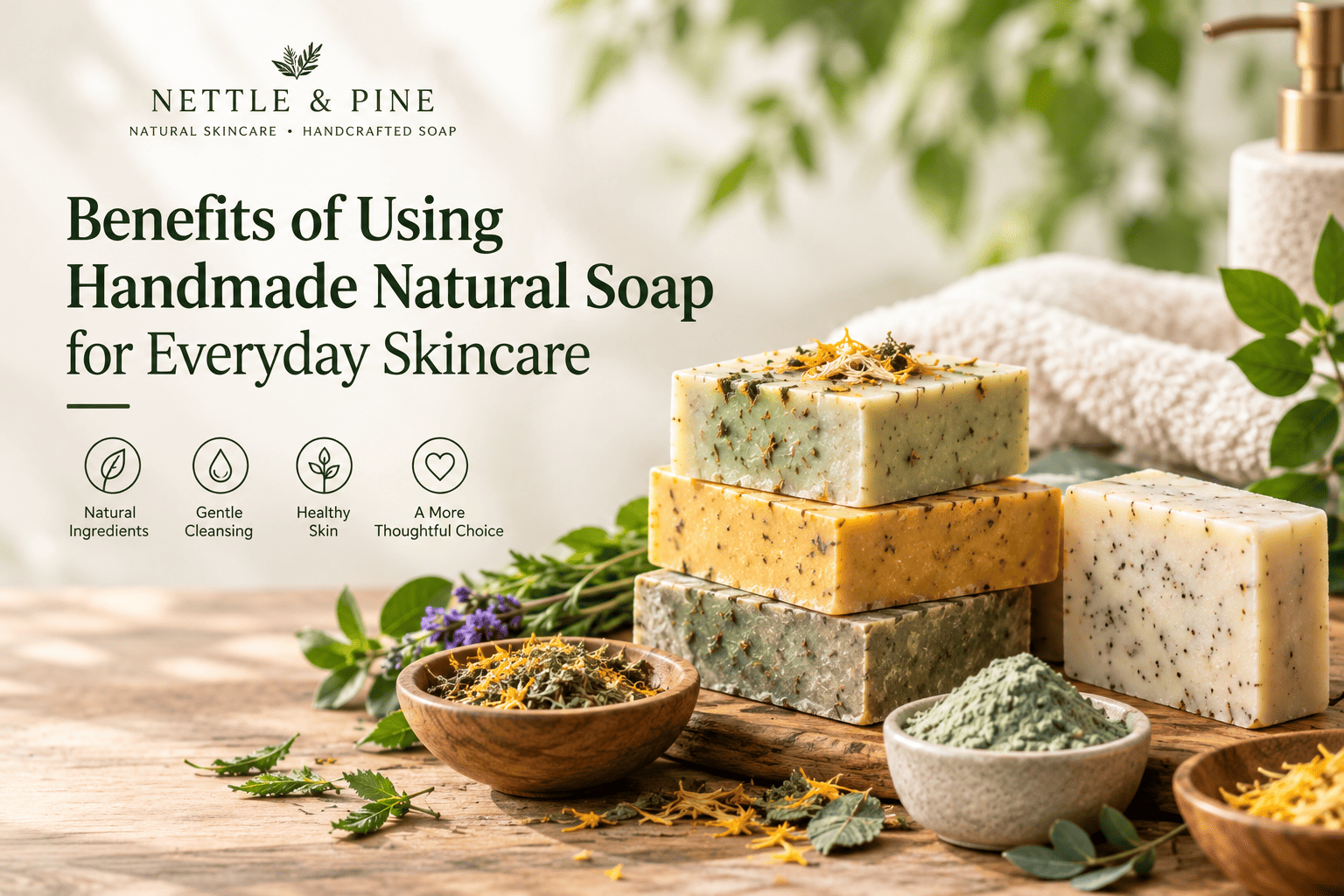
Cold Process Soap vs Commercial Soap: What’s the Difference?
When choosing a soap for your daily skincare routine, the options can feel endless. Walk into any store and you’ll find dozens of commercial soaps, while handmade and cold process soaps have become increasingly popular among people looking for a more traditional approach to skincare.
But what actually makes cold process soap different from commercial soap?
The biggest differences come down to how the soap is made, the ingredients used, how the natural glycerin is handled, and the overall approach to formulation. Understanding these differences can help you make a more informed choice for your skin.
What Is Cold Process Soap?
Cold process soap is a traditional soapmaking method that combines oils or plant-based butters with an alkali, commonly sodium hydroxide (lye), to create soap through a chemical reaction called saponification.
Although lye is essential to making true soap, it does not remain in the finished product when the recipe is properly formulated and the saponification process is complete.
Unlike many mass-produced soaps, cold process soap is typically made in small batches. The ingredients are carefully measured, mixed, poured into molds, cut into individual bars, and then allowed to cure.
The curing process can take several weeks. During this time, excess water evaporates and the bar becomes harder, milder, and longer-lasting.
What Is Commercial Soap?
Commercial soap refers to products manufactured on a larger scale for widespread distribution. These products are generally designed for consistency, long shelf life, appearance, fragrance, and cost efficiency.
Many commercial cleansing bars contain additional ingredients such as synthetic fragrances, colorants, preservatives, detergents, or other cleansing agents. Some products marketed as “soap” are technically syndet bars, meaning they are made primarily with synthetic detergents rather than traditional soap.
Commercial products aren’t necessarily bad. They can be convenient, affordable, and formulated for specific purposes. However, their manufacturing process and ingredient choices can be quite different from those used in handcrafted cold process soap.
Cold Process Soap vs Commercial Soap: Key Differences
1. Manufacturing Process
One of the biggest differences is how the products are manufactured.
Cold process soap is generally made by combining carefully selected oils and fats with an alkaline solution and allowing saponification to occur naturally. The finished bars are then cured for an extended period.
Commercial soap is often manufactured using highly automated processes designed to produce large quantities efficiently and consistently.
For people who appreciate traditional craftsmanship and small-batch production, cold process soap offers a different experience.
2. Ingredients
Cold process soap recipes often emphasize plant-based oils, butters, clays, herbs, botanical ingredients, and naturally derived additives.
Common ingredients found in handmade soap may include:
- Olive oil
- Coconut oil
- Shea butter
- Castor oil
- Botanical extracts
- Natural clays
- Herbs
- Plant powders
- Essential oils
Commercial cleansing products can contain a much wider variety of ingredients depending on their formulation and purpose.
The important point isn’t simply whether an ingredient is “natural” or “synthetic.” What matters is the complete formulation, ingredient quality, concentration, and how your individual skin responds to the product.
3. Natural Glycerin
Glycerin is a natural byproduct of the soapmaking process.
In traditional cold process soap, the glycerin created during saponification generally remains in the finished bar. Glycerin is a humectant, meaning it can help attract and retain moisture at the skin’s surface.
Some commercial soap manufacturing processes separate glycerin from the soap for other uses and may subsequently add or omit ingredients depending on the final formulation.
This is one reason many handmade soap enthusiasts appreciate traditionally made soap.
4. Curing Time
Cold process soap requires patience.
After the soap is removed from its mold and cut into bars, it usually needs several weeks to cure. During curing, water gradually evaporates and the soap becomes firmer.
A properly cured bar can provide a pleasant lather while lasting longer during regular use.
Commercial soap, on the other hand, is manufactured using industrial processes that allow products to be packaged and distributed much more quickly.
5. Small-Batch Craftsmanship
Handmade cold process soap is often produced in smaller batches.
This allows soapmakers to pay closer attention to individual recipes, ingredients, textures, colors, scents, and curing conditions.
Small-batch production also gives brands greater flexibility to create specialized formulations using ingredients such as botanical powders, clays, herbs, and plant oils.
For consumers, this can make handmade soap feel more personal and intentional than mass-produced alternatives.
Is Cold Process Soap Better for Your Skin?
There isn’t one soap that is universally “best” for everyone.
Skin varies considerably from person to person. Someone with dry skin may prefer a different formulation than someone with oily skin, while people with sensitive skin may need to pay particular attention to fragrance and other potentially irritating ingredients.
However, a thoughtfully formulated cold process soap can be an excellent option for people who prefer:
- Traditionally made soap
- Plant-based oils and butters
- Small-batch products
- Simple ingredient lists
- Botanical ingredients
- Naturally occurring glycerin
- Handcrafted skincare products
It’s also important to remember that “natural” does not automatically mean “gentle.” Essential oils, botanical extracts, and other natural ingredients can cause irritation or allergic reactions in some individuals.
Cold Process Soap and Different Skin Types
For Dry Skin
Look for formulations containing moisturizing oils and butters and avoid excessively harsh cleansing products. A gentle soap combined with a suitable moisturizer can help support a comfortable skincare routine.
For Oily Skin
Oily skin still needs cleansing without excessive stripping. Over-cleansing can leave skin feeling dry or tight and may make your routine more difficult to manage.
For Sensitive Skin
Ingredient selection becomes particularly important. Consider products with simple formulations and avoid ingredients you already know cause irritation.
If you have a diagnosed skin condition or persistent irritation, speak with a dermatologist rather than relying solely on changes to your soap.
Why People Choose Handmade Cold Process Soap
The growing interest in handmade soap isn’t only about skincare. Many consumers also value the craftsmanship and transparency associated with small-batch products.
Handmade soap can offer an opportunity to understand what goes into a product and why specific ingredients are included.
For brands such as Nettle & Pine, the focus on botanical ingredients, traditional soapmaking, and handcrafted production provides an alternative to highly standardized mass-market cleansing products.
How to Choose a Good Cold Process Soap
If you’re considering switching to handmade soap, don’t choose a bar based only on its appearance or fragrance.
Instead, consider:
Read the ingredient list: Look for ingredients you recognize and understand.
Consider your skin type: Choose a formulation that matches your skin’s needs.
Check the fragrance: Strongly fragranced products aren’t necessarily better. If your skin is sensitive, you may prefer simpler formulations.
Look for properly cured soap: Quality cold process soap typically requires adequate curing time.
Buy from a transparent maker: A reputable soapmaker should be willing to explain the ingredients and manufacturing process.
Pay attention to your skin: If a product causes persistent burning, redness, itching, or irritation, discontinue use.
FAQs
Is cold process soap actually natural?
Cold process refers primarily to the method used to make the soap, not a guarantee that every ingredient is natural. Many cold process soaps use plant oils, botanicals, clays, and other naturally derived ingredients, but formulations vary between makers.
Does cold process soap contain lye?
Lye is necessary for traditional soapmaking. During saponification, it reacts with oils and fats to create soap. Properly formulated and cured soap should not contain excess lye.
How long does cold process soap last?
A properly cured, well-formulated bar can last for several weeks or longer depending on its size, formulation, how often it is used, and how it is stored.
Why does handmade soap need to cure?
Curing allows excess water to evaporate and gives the soap time to develop a harder, longer-lasting bar. It also improves the overall performance of the finished soap.
Is handmade soap suitable for sensitive skin?
It can be, but not every handmade soap is suitable for every person with sensitive skin. Fragrance, essential oils, botanicals, and other ingredients may cause irritation in some individuals. Always review the ingredient list and consider your personal sensitivities.
Can I use cold process soap on my face?
Some cold process soaps may be formulated for facial use, but not every body soap is appropriate for the face. Facial skin can be more sensitive, so choose a product specifically formulated for facial cleansing when possible.
Final Thoughts
The difference between cold process soap and commercial soap goes beyond packaging and appearance. The manufacturing process, ingredient selection, curing time, glycerin content, and production scale can all differ.
Commercial cleansing products can offer convenience and consistency, while cold process soap appeals to people who value traditional soapmaking, carefully selected ingredients, and small-batch craftsmanship.
Ultimately, the best soap is one that works comfortably with your skin and fits your personal preferences.
If you’re interested in exploring traditionally crafted skincare, Nettle & Pine offers a selection of handmade soaps inspired by botanical ingredients and time-tested soapmaking practices.